Writing Mental Health
Writing Mental Health
guest post by Rocky Callen
When we write for young people, we step into a space of immense responsibility. The page is not just a place for a story, but is often also a lifeline. Many readers will come to our work carrying invisible weight, searching—sometimes consciously, sometimes not—for language to understand themselves.
If we want to be thoughtful about our portrayal of mental health in books, we must use craft to show up with respect for these experiences with each word and the white spaces between them. Craft, in essence, is about intentionality. And when writing mental health, we must be radically intentional.
Before we start drafting…
Before diving into the technical aspects of storytelling, we need a grounded foundation.
If you are not writing from lived experience, research is not optional; it is essential. But beyond clinical research, interviews are where truth lives. Textbooks can give you symptoms. People give you the raw nuances of an experience.
Ask questions like:
How did you first realize something was different?
What do you say out loud and what do you keep hidden?
What stories does your mind tell you?
Which of those stories feel true? Which aren’t?
What do people misunderstand most about your experience?
What do you wish people knew about your day to day life?
These conversations allow you to write from a place of reverence rather than assumption. They help you avoid flattening a character into a diagnosis and instead create someone layered, honest and alive.
Craft: The Story Itself
AVOID Tragedy as the Inevitable
Once you begin shaping your story, one of the most critical craft decisions is framing the narrative.
For young people especially, we must be careful not to present mental health struggles as inevitably leading to tragedy. This does not mean avoiding pain or darkness. It means resisting the idea that pain is the only destination.
Hope does not require a perfect ending. It requires the presence of possibility.
A character can struggle deeply and still:
experience moments of relief
build meaningful relationships
learn tools for navigating their mind
survive
recognize that good exists even when there is pain.
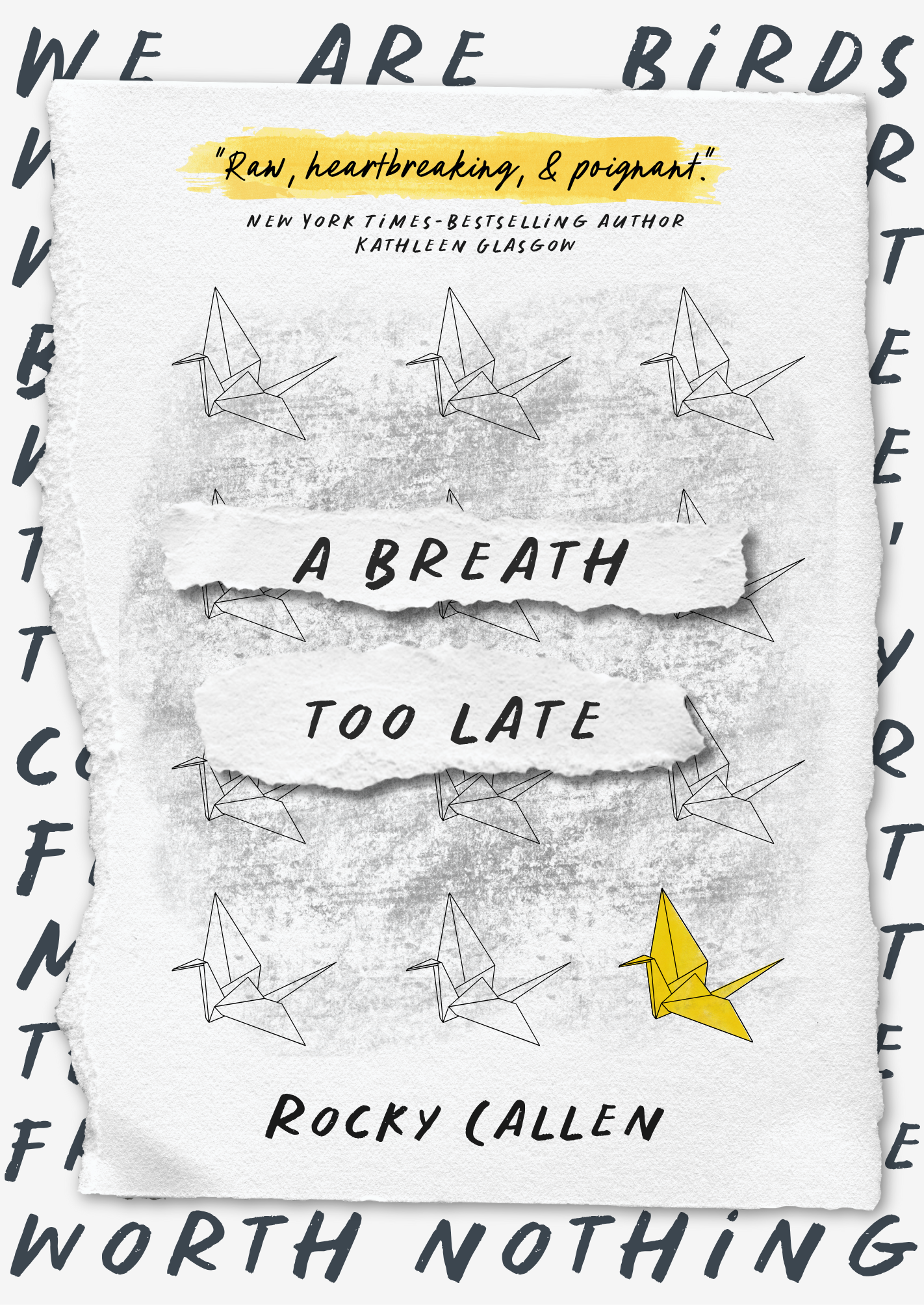
In my novel A Breath Too Late, my main character dies by suicide on the first page. The story is tragic, but the unfolding of the narrative shows the main character that love and hope had been reaching for her all along, a quiet reminder for the reader to search for that hope before it is too late.
Hope on the page can be quiet. It can be a single breath, a decision to stay, a moment of connection. But it must exist in these stories.
Resist the “Fixing” Narrative
One of the most common pitfalls in writing mental health is the “fixing” arc.
A relationship does not cure depression.
A revelation does not erase anxiety.
A single good day does not undo a chronic condition.
“Don’t fix it. Love fixes it” is a seductive idea, but it’s not true, and it can be harmful.
Instead, show:
support systems that evolve over time
coping mechanisms (healthy and unhealthy)
setbacks alongside progress
the ongoing nature of management
Let your characters be whole people. Their mental health is part of their identity, but it is not the entirety of who they are. They have humor, desires, flaws, dreams, contradictions.
Craft: The Page as an Experience
Going deeper into craft, we can discover ways that our words and the spaces between them can impact a reader’s experience of the page. This is where your work becomes immersive.
Consider how syntax, punctuation, and rhythm can mirror a character’s internal state.
Is your character overwhelmed? Let the sentence reflect it:
I am so tired and no one sees that I keep smiling but my feet don’t want to move and everything feels too loud and too much and I can’t—
Is their mind racing?
IamsotiredandnooneseesthatIkeepsmilingbutmyfeetdon’twanttomove.
Is their thinking fragmented?
I was fine.
I think.No.
Not fine.
Is there emptiness?
I
amdrifting
White space has meaning. We have often seen how expertly this is used in poetry and novels in verse, but it can also be used strategically in prose.
Run-on sentences can create panic.
Short, staccato lines can create disorientation.
Repetition can mimic intrusive thoughts.
You are not just telling the reader what the character feels, you are inviting them to feel it too.
Ask yourself:
What does this mental experience feel like in the body?
How can the page reflect that sensation?
These choices should always serve clarity, not confusion for its own sake. The goal is not to alienate the reader, but to bring them closer to the character’s lived experience.
Last thoughts…
Writing mental health stories is not about perfection. It’s about care. When we show up to the story and the page with intentionality, we are not only crafting stories that are moving and honest, but those stories can be a safe haven for young people as they navigate their own lives.
This work and these stories matter. They are a brave endeavor.
Be brave & write on.

Rocky Callen is a critically acclaimed author, speaker, and writing consultant. She has hosted writing workshops and retreats from Washington, D.C. to Bali and has spoken on regional, national, and international stages on writing and books, mental health, and art and social impact.
She is the author of the YA novel A Breath Too Late, which was named a Kirkus Reviews Best Young Adult Book of the Year, a Chicago Public Library Best Book of the Year, and was featured in The Mujerista's 2020 list of the Ten Best Young Adult Books by Latinx Authors. She was a contributing co-editor for the mental health YA anthology Ab(solutely) Normal: Sixteen Stories that Smash Mental Health Stereotypes (Candlewick). Her latest YA novel, Crashing Into You, received two starred reviews. She recently sold her first two picture books to Simon & Schuster.
She founded HoldOn2Hope, a project that unites creatives in suicide prevention and mental health awareness. She has an MFA from the Vermont School of Fine Arts.
Visit her online at rockycallen.com and on Instagram @rockywrites.
Related Articles: